Gill collaborated with two research scientists from University College London (UCL), together with some cancer patient representatives, to help them jointly create an illustrated information sheet. This sheet would describe the scientist’s research into an improved imaging procedure for radiotherapy treatment. An open access paper detailing this work (entitled Deep learning based synthetic CT from cone beam CT generation for abdominal paediatric radiotherapy) had recently been published in the journal Physics in Medicine & Biology, and can be downloaded from the link below:
The process of creating an information sheet to summarise a scientific research paper was a first for both the scientists and the patient representatives, and was coordinated by a member of the Public Engagement group at King’s College London’s Centre for Medical Engineering. Gill and the patient representatives read the research paper, before taking part in two online meetings with the scientists, and all of them found the paper extremely difficult to understand. It became obvious that the information sheet would have to be greatly simplified, and contain more background information, to allow non-scientists to understand the contents. During the meetings it was agreed that four figures would help the information sheet:
- Figure 1 – to show the treatment pathway and explain the difference between a planning imaging scan (a CT scan) and a treatment imaging scan (a CBCT scan).
- Figure 2 – to illustrate the changes in the abdomen that can happen between a planning scan and a treatment scan
- Figure 3 – an illustrative image to represent the improved AI workflow that was used in the research.
- Figure 4 – to show the results of the improved scans.
Following the two online meetings that included all of the patient representatives, Gill and the KCL facilitator held several online meetings to discuss both the figures and the information sheet as a whole. It was agreed that Figure 3 would just be a simple representation of AI as cogs within a ‘black box’, as anything more complex would just be too difficult to visualise in a comprehensible way. Figure 4 would just include screen captures of the scan results from the research paper. Therefore, only figures 1 and 2 needed more detailed illustrations and these are shown in the gallery below:
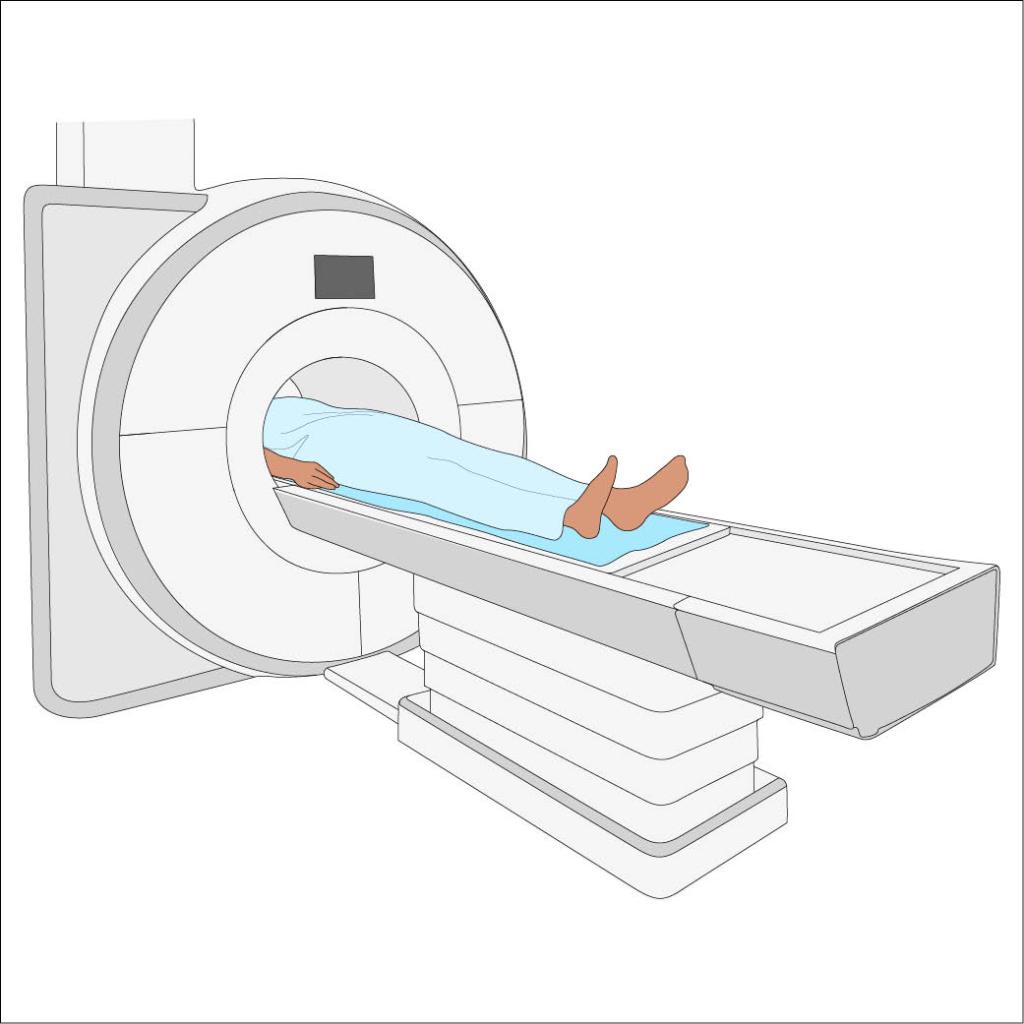
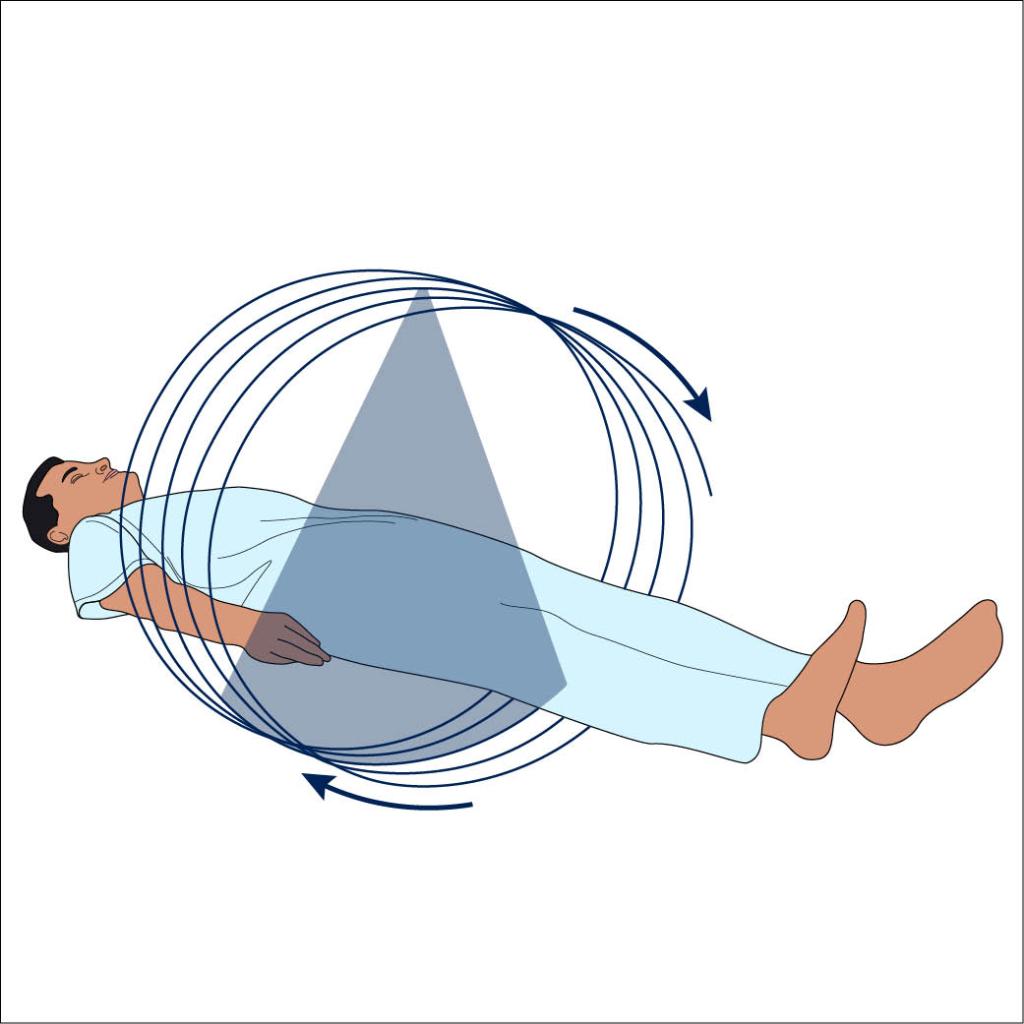
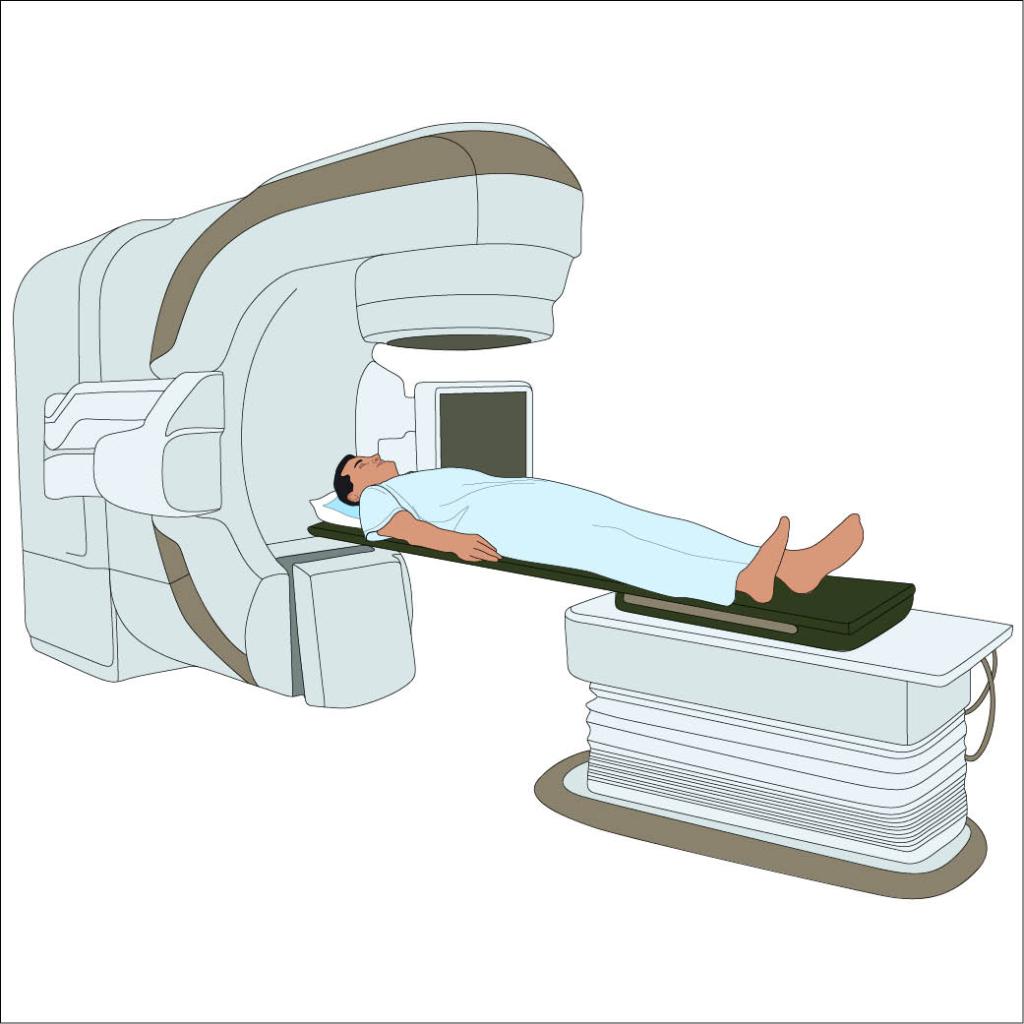
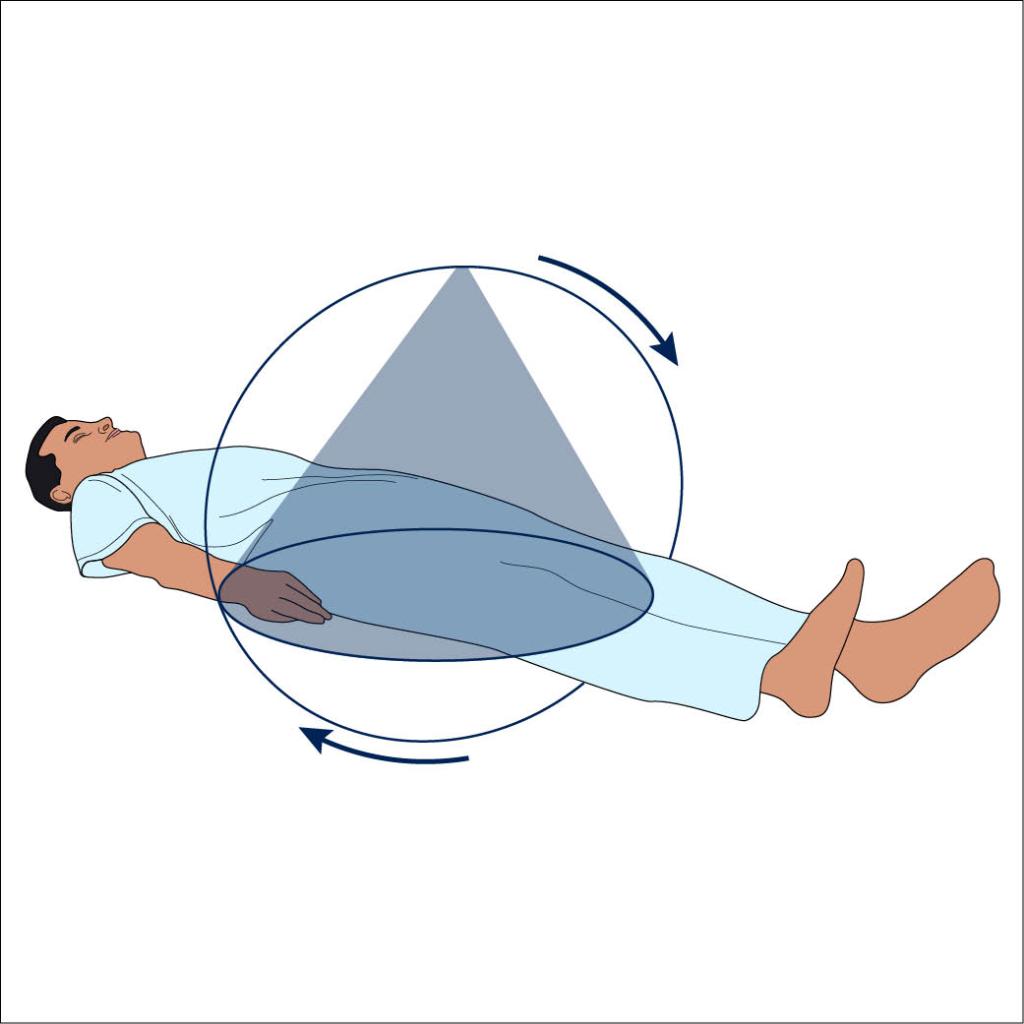

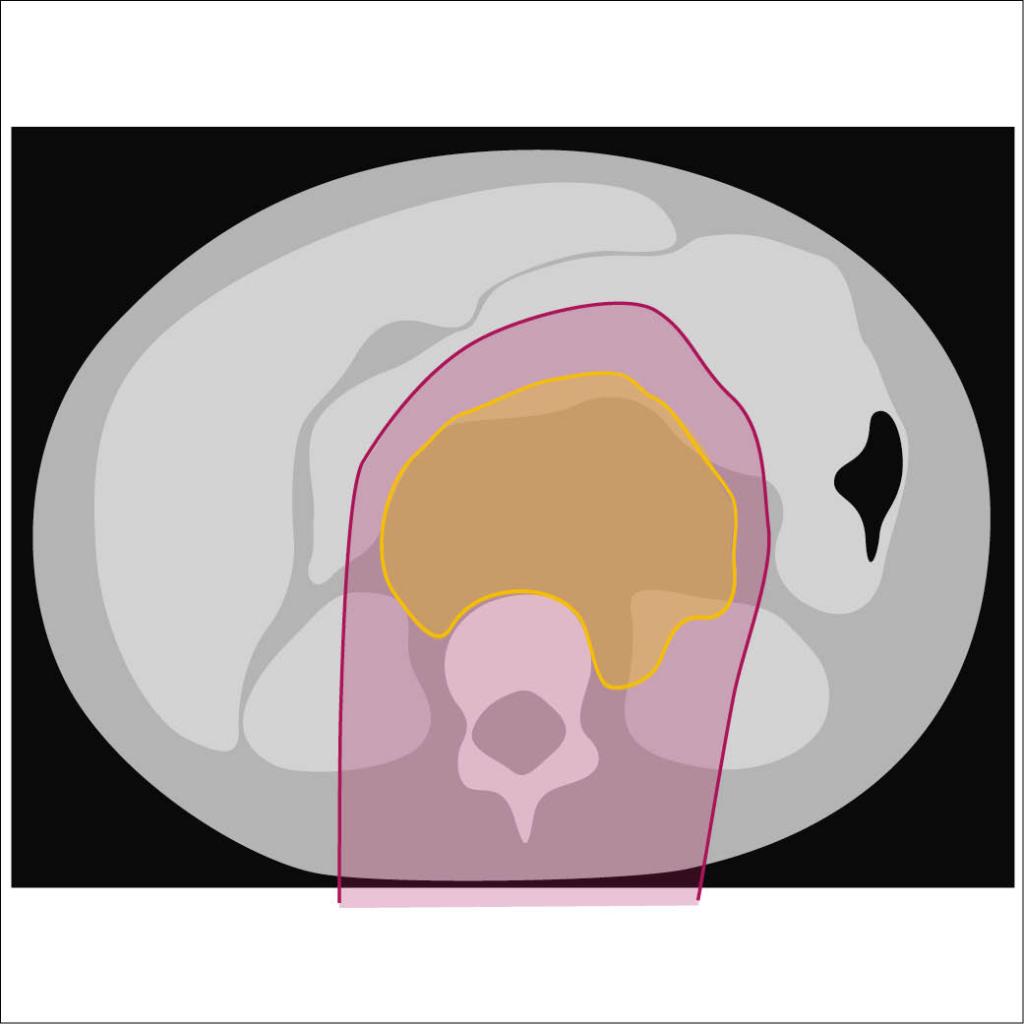
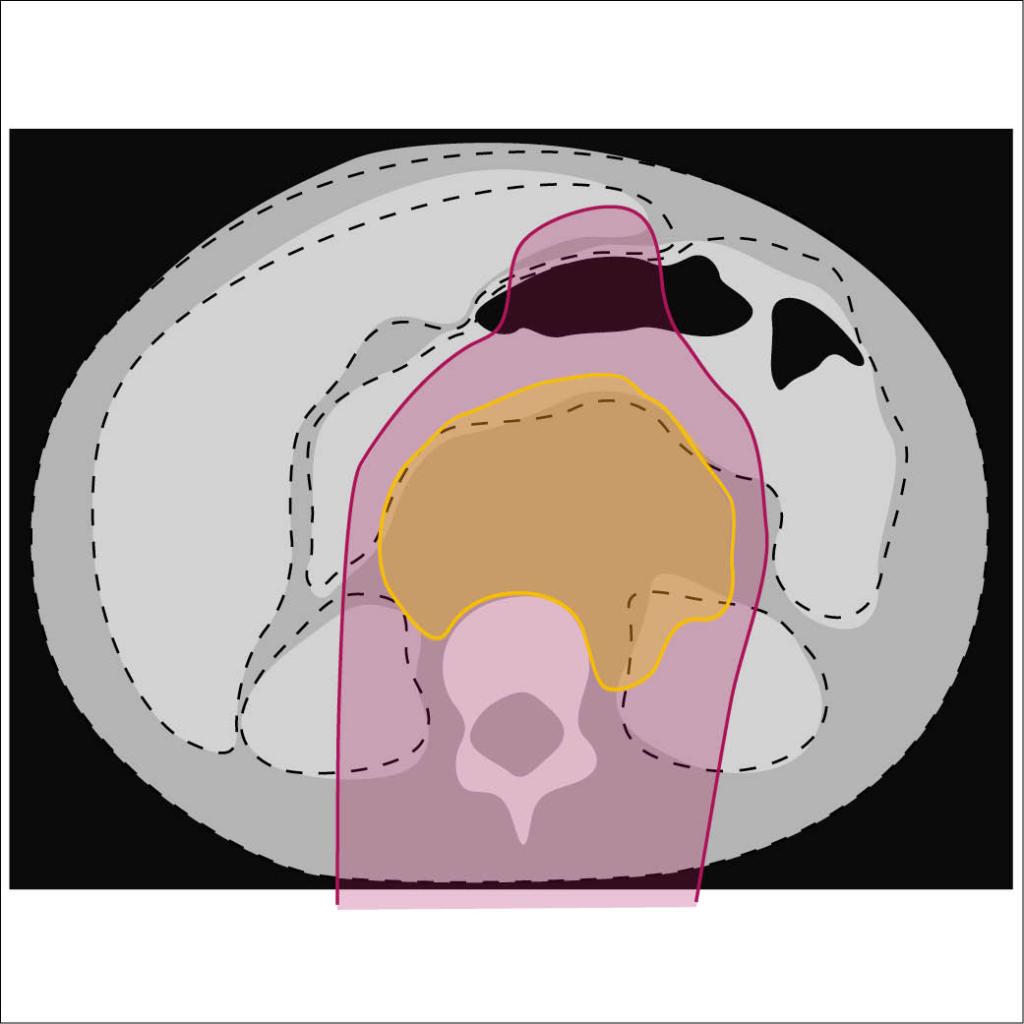
The illustrations were then combined in the figures shown below:
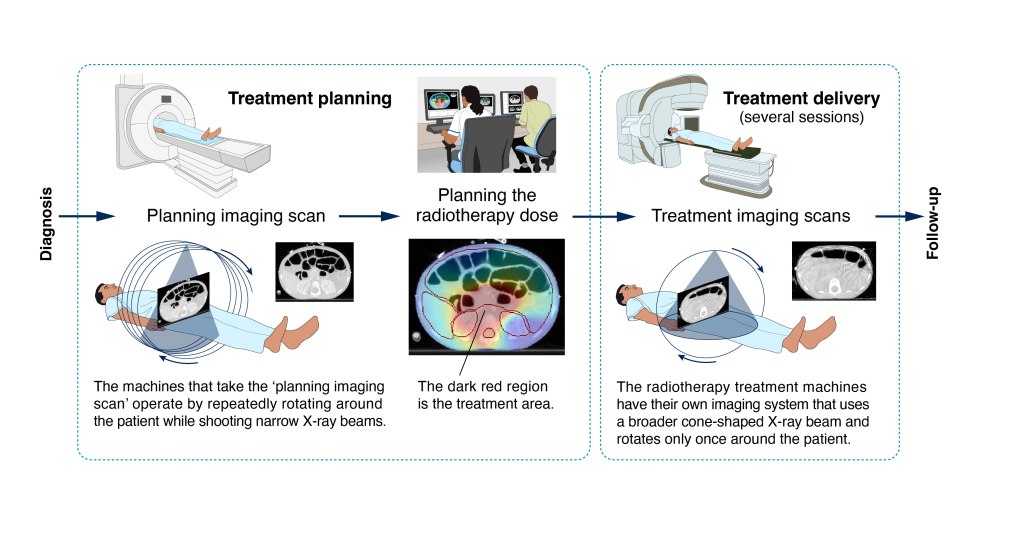
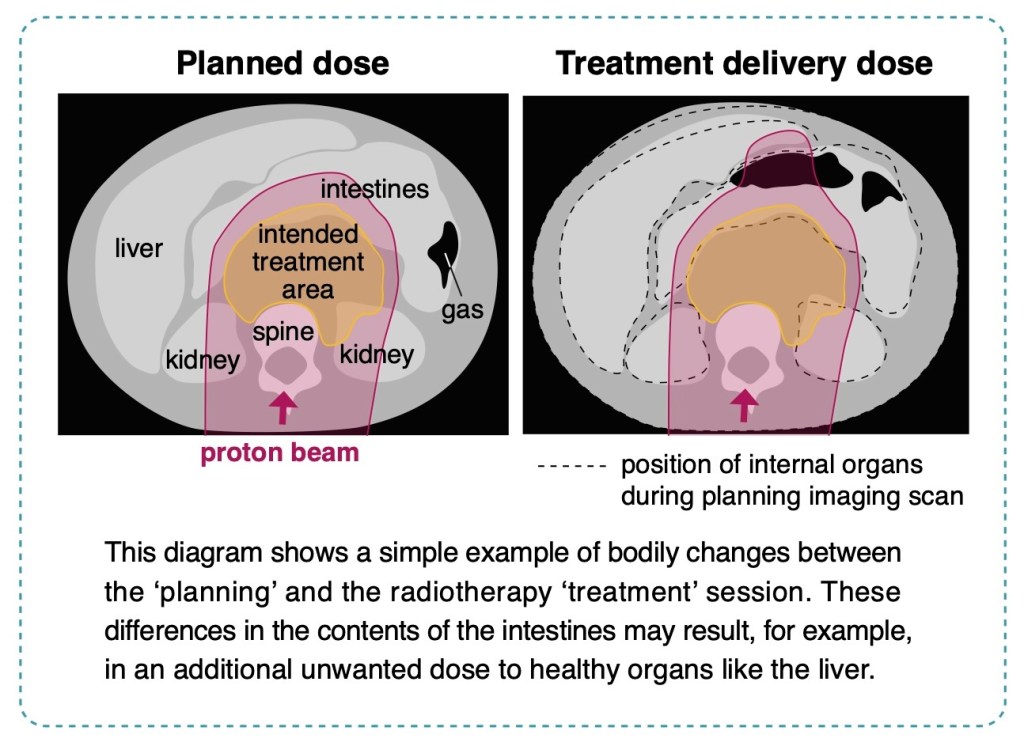
Finalising the text and the layout took many iterations and further online meetings with the scientists. Once the information sheet was close to final, another online meeting was scheduled with the patient representatives to get their feedback, which was generally very positive. Some more small changes were made to the layout, mainly to add more graphic details, such as text boxes and icons, to make the sheet appear more accessible to non-scientists. The final version of the illustrated information sheet – which was version 17 – is shown below.
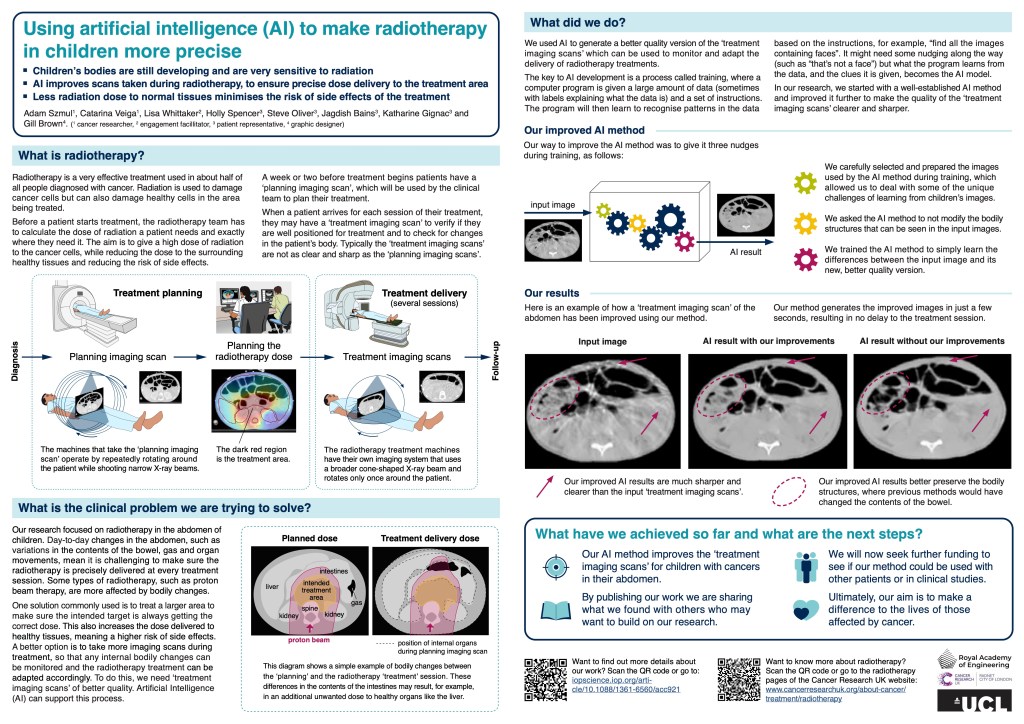
The final illustrated information sheet was accepted by the publishing journal as supplementary data to the original article – both can be accessed and downloaded from this link.
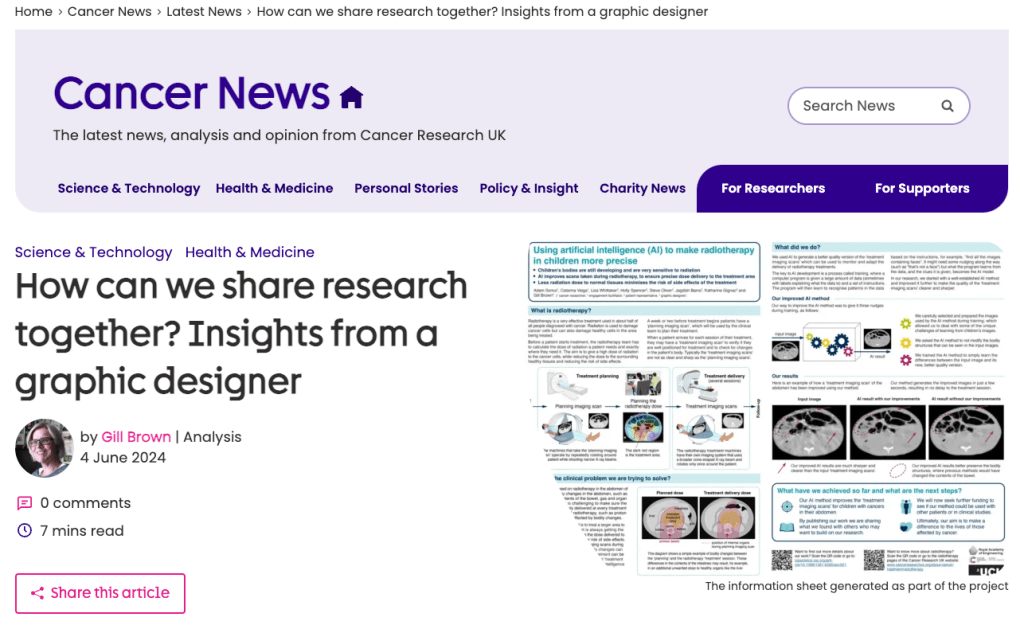
A short article about the project can be seen on the Cancer Research UK RadNet website and Gill has contributed one of a series of longer articles for the main CRUK webpage. This longer article can be seen on this webpage of the Cancer Research UK RadNet website, with links to articles by the other team members.
A simplified pdf file of Gill’s article can be downloaded from the link below:
One of the co-authors of the original paper joined in with the final online meeting to finalise the information sheet, and she was keen for Gill to adapt some of the figures for use in a patient information sheet that she was producing for an upcoming research study. That work will be detailed in a separate project.
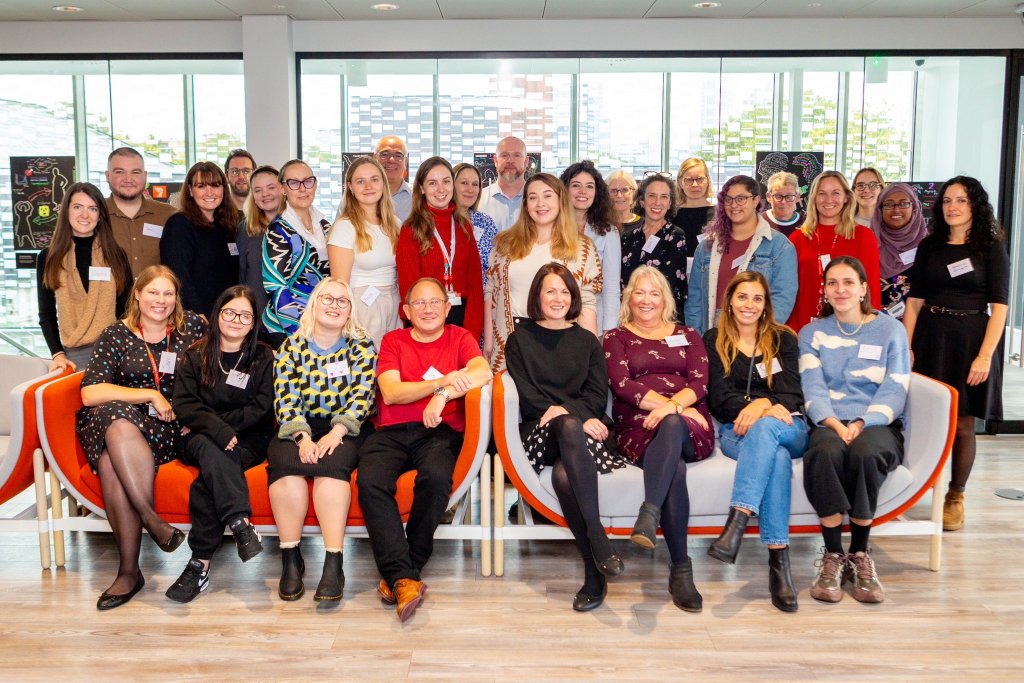
In October 2024, CRUK RadNet held an event to celebrate their Patient and Public Involvement and Engagement (PPIE) activities over the past five years, one of which was this illustrated information sheet project. The event was a great opportunity for Gill to meet in-person, for the first time, with some of her collaborators on the project and to see the results of other PPIE activities.
 Graphical Science